Monday, June 2, 2014

When Worlds Collide: Email Meets Mobile


I am seeing a huge opportunity for anyone ready and willing to take the next step for the "killer app" for mobile email that finally unleashes the full potential of mobile email.

Consider this series of charts below:

Do you see what I'm seeing?  Something is definitely wrong here.

If the majority of online conversions are coming from email, and if the majority of emails are read on smartphones, then why is less than 1% of conversions coming from smartphones?

There still remains the faction that asserts that smartphones are primarily used for "triaging" emails.  In other words, smartphones being used as first pass filters of emails to delete the irrelevant ones and reserve the remaining important ones to be read on a desktop/laptop/tablet at a later time.

I don't believe that it can be dismissed so easily.

I assert that the problem isn't with the email.  It's what comes after the email -- that's the problem.  Mobile-friendly email design is now gaining momentum since three years ago.  This shift towards the "mobile-first" paradigm is one major reason why email readership on mobile devices continues to grow. But here's the problem:

  1. I read my email on my smartphone (it's actually now my sole email reading device).  
  2. I like the call to action in the email, so I click the link in the email to complete the action on the web site.  
  3. But when my mobile browser launches the landing page, I'm greeted with the most mobile un-friendly experience.  Forget about trying to buy anything.  The payment experience on a mobile device is horrendous -- and that's putting it nicely.

This poor transition from email to web site is exactly like a hot warm up band who gets the audience all fired up and excited to rock and roll.  But the headline band comes on stage and just bombs.  And people in the audience start getting up and walking out.  Been there.  Done that.

At the very least, the mobile experience needs to be the FULL experience.  Don't just stop with the mobile-friendly email.  If the mobile shopping experience and the mobile payment experience isn't there to follow up, then work spent on the mobile email are all for naught.

The M-Commerce ecosystem right now has only two solutions:  mobile web and mobile apps.  The former is the more preferred by a margin of 2 to 1 over the latter.  That makes sense to me.  Mobile apps are used by brand loyalists while the mobile web is used by both brand loyalists and casual buyers alike.

I believe that the frontier is wide open to innovate in the world of m-commerce particularly where it bridges the gap between mobile email and mobile payments.

On that note, I invite you to check out a young startup that has a new way of conducting commerce:  buying something directly from within an email.  The company is @Pay.  I heard about them a while ago and I continue to keep my eye on them.

@Pay calls it their "2-click buy" experience.  When you're reading an email from one of your favorite brands, you see a product that you want to buy.  So you click the "Instant buy" button. (That's Click #1).  Then, your default email program automatically creates a purchase confirmation email that you send back authorizing the purchase.   (That's Click #2).

If you already have an account through @Pay or any of its merchant network, that's all you need.  Your payment information is already on file.  No biggie, right?  You're already used to this experience 'cause you've already done it million times already on iTunes, Google store, Amazon.com, and countless of other places.

iTunes has your credit card info on file.  That lets you buy anything directly from within any iOS app at the click of a button.  Well the @Pay experience is identical -- only now, you're doing it directly from within an email.

It's an interesting bit of technology and it still requires some people willing to try out this new method of payment.

But then again, that's where Paypal was back in the late 90's, and look where they are at now.

Friday, August 23, 2013

The Rise of the Mobile Wallet

Mobile wallets are the next step in the evolution of commerce.  Society continues to benefit from the efficiencies gained from each incremental step.


In The Beginning
In the beginning, commerce was conducted on a barter system in which two parties traded goods and services with each other.  While it worked well for a long time, the problem with barter is that - well frankly - it's very inefficient.
The problem is that if I have a need for a product or a service, I have to expend a lot of time and effort trying to find not only someone who produces what I want, but also someone who is willing to trade with me for what I have.

Currency:  The First Evolutionary Step
A couple of thousand years ago, the first evolutionary step in commerce came about with the usage of common currency.
Currency made commerce transferable.  With currency, commerce became a lot easier and a lot more efficient.

But the only drawback of currency is that it is a tangible item that must literally pass from hand to hand.  Therefore, commerce between individuals has an inherent physical restriction.

Credit Cards: The Second Evolutionary Step
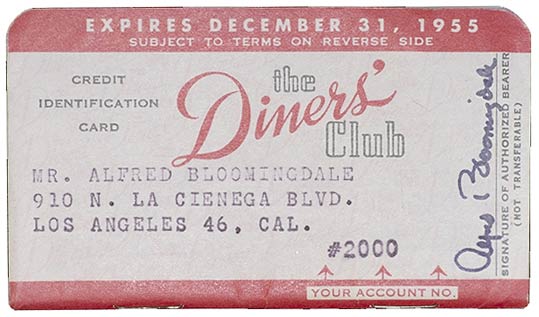
The invention of the credit card in the 1950's was the next evolutionary step in commerce.

Credit cards made commerce transportable.  Credit cards also laid the foundation for e-commerce, a revolution begun in the late 1990's and gave rise to an entire new way of buying and selling.  Thanks to credit cards, two individuals can transact business even though each can be on opposite sides of the earth.

Digital Wallets:  The Third Evolution Step
The third evolutionary step in commerce is the digital wallet whose birth was legitimized in September 1999 when the U.S. Patent Office awarded Amazon.com Patent No. 5,960,411 "A Method and system for placing a purchase order via a communications network."  The rest of us refer to this patent as the "One-Click" patent.

The digital wallet makes commerce transparent.  By storing your credit card in Amazon's digital wallet, you no longer had to think about commerce at all.  With a single click of a button, ownership became instant.

The first true digital wallet came about circa 2000.

I'm old enough to remember when PayPal first burst into the scene.  I was working at a DotCom startup (who wasn't back in those days?) and we were all scratching our heads asking, "who is this PayPal?  Is it for real?"

Thirteen years later, it's interesting to see three things that PayPal did to revolutionize commerce:
  1. They eliminated risk of online shopping.  Back then, people were hesitant to enter their credit card information on line (I know -- right?).
  2. They enabled online shopping for people who didn't own credit cards by funding PayPal accounts directly from checking or savings accounts.
  3. They truly made commerce transparent.  If you had logged into PayPal at least once and you hadn't cleared your browser cookies, then anytime you clicked on the "pay with PayPal" link on an e-commerce site, the payment was immediate.  You didn't have to think any more about it.
The Mobile Wallet:  Sibling of the Digital Wallet
 Interest in mobile wallets is today's Hot Topic.  Everywhere you look, there's yet another initiative, yet another consortium working on developing the next Big Thing for mobile wallets.

When smartphones were being developed, forward-thinking people were looking at mobile wallets as the next revolutionary step beyond the credit card.

But, there is a problem.  You can't slide a mobile device through a slot like you can a credit card.  So these forward-thinking people started looking at a new type of wireless communication that was emerging at the time.  After all -- a cellphone is nothing more than a radio transmitter AND a radio receiver.
Near-Field Communication (NFC) allows data transfer between a transmitter and a receiver simply by touching the two devices.  NFC is the technology that was considered early on for mobile wallets.  The idea is that your smartphone has a mobile app which is your mobile wallet.  The mobile app communicates with a microchip on your NFC-enabled smartphone and the microchip manages the communication with an NFC-enabled point of sale system.  The data that gets transferred between the two devices is the same data that is normally transferred when swiping the magnetic strip of your credit card.

But there's a conundrum.
As a consumer, why bother with paying by way of NFC when there aren't that many NFC-enabled point of sale systems or NFC-enabled smartphones.

As a merchant, why bother spending all that time and money upgrading to an NFC-enabled point of sale system if there aren't that many people paying by way of NFC?

As a smartphone manufacturer, why bother spending all that time and money development and marketing an NFC-enabled device when there aren't that many NFC-enabled point of sale systems nor people willing to pay by NFC?

This problem is the main reason why digital wallets and their mobile siblings haven't really taken off for in store purchases.

Nevertheless, digital wallets are doing quite well, thank-you-very-much, online -- where it all began.

Do you like the first 30 seconds of a tune you're listening to? Touch a button and it's yours.  Do you want to read a book now?  Touch a button and you're flipping pages within seconds.  Are you in the middle of a MMO game and you need to upgrade your weaponry pronto?  Touch a button and you are instantly ready to rumble.

The key takeaway from my blog post today is an admonition to online merchants all across the globe:  the traditional online payment paradigm is actually costing you money in lost opportunity and sales.

Traditional payment methods haven't evolved much in the past 15 years since the early days when people accessed the web from their desktop computers.  Today's online payment paradigm hinders commerce via mobile devices.  As more and more people are shifting their behavior to accessing the web via their mobile devices more and more of the time, it's time to remove as many barriers to commerce as possible.

Digital wallets make commerce transparent.  Digital wallets make ownership instantaneous.  Adopt digital wallets as payment options on your e-commerce sites. 

Friday, October 12, 2012

Mobile Commerce is Growing: Are You Ready?

Just got back from Internet Retailer's Mobile Marketing and Commerce Forum in San Diego.  Kudos to the program team for putting together an agenda that included all the hot topics and buzzwords in mobile marketing including: Mobile Apps vs. Mobile Web, M-Commerce and T-Commerce, Showrooming, Responsive Design, HTML5, 2D Codes, Augmented Reality, and Apple's new Passbook app.

Here are my ten takeaways from what I learned:
  • Ad spending in the mobile channel is only 2% of total.  But  20% of holiday e-commerce sales are expected to be done via mobile devices.  There is huge room for improvement in mobile advertising.
  • More proof that retailers need to focus their attention on the mobile shopping experience:  the click-through-rate on mobile devices is 2X-5X higher than from desktop computers, but the conversion rate is 3x-4x lower. 
  • More indicators that shopping is going mobile:  Purchases from tablets are up 200% and purchases from smartphones are up 100% from previous year.  At the same time, purchases from desktops are down 20%.
  • 78% of smartphone owners use their devices during in-store purchases.  But most consumers don't "showroom" as their main shopping behavior.  They only do it when the in-store experience fails them.
  • 75% of first items scanned on a smartphone in-store are purchased in the same store.  Is showrooming really a problem, or it is just an urban myth?
  • Mobile apps vs. Mobile Web?  The answer is "both" not "either-or."  With space on smartphones at a premium, mobile apps are for loyal customers.  Mobile web is great for acquiring new customers.
  • A seamless and easy mobile payment experience will make or break a mobile shopping app.  Easy checkout can give 30% lift to sales made from mobile devices.
  • Augmented Reality isn't just for walking down the street and seeing where all your Facebook peeps are within eyesight.  It also provides an effective in-home shopping experience for the right products.  Some retailers are experimenting with this technology to showcase their catalog of curtains, window blinds, artwork, and furniture as they would virtually appear within the shopper's own home.
  • HTML5 and Pinterest-esque layouts are two factors that will be driving the next generation of web sites.  "Design first for the tablet - then for everything else" was one common theme.
  • Consumers aren't shy about buying from mobile devices.  Case in point: $1095 Lasik Surgery package purchased on Groupon from a mobile device.

Friday, April 13, 2012

Mobile Apps vs. Mobile Web - Why Not Both

Mobile Apps versus Mobile Web: which provides the better consumer experience?

Mobile Apps provide a much richer user experience, allowing the app publishers to leverage many capabilities of the mobile operating system including geo-positioning, direct in-app commerce, gyroscopic sensors, the camera, and much more.

Mobile Web provides a much richer degree of ubiquity and it's a heck of a lot cheaper. Back in the late '90s, web browsers introduced a new paradigm shift in application development in which browser-based SaaS became a better model over the native Mac vs. Windows vs. UNIX vs. SunOS challenge existing at that time. Thanks to the mobile web and upcoming HTML5, the similar challenge of native iOS vs. Android vs. RIM vs. Windows goes by the wayside.

A recent study from Nielsen indicates that retail web sites are more popular than retail apps by approximately 2 to 1, and that Amazon.com is THE most popular web site of all. 

By why does it have to be an either/or proposition? Why can't the mobile web and mobile apps coexist in a complimentary manner?

This is the very conclusion that panelists of a recent webinar co-sponsored by Mobile Marketer and Fiksu. Brands represented included JetBlue Airways, Staples, Fiksu, and ESPN.

So just how do the mobile web and mobile apps play together? Here are some tips that the panelists presented:

Advantage Mobile Web:
Here are three cases where mobile web is your better option:
  • Content that needs to be fresh and up to date - It's easier to update a web site than it is to update an app and to expect users to constantly re-install the latest version
  • Need to be easily discovered - Thanks to Google and Bing, people are going to find your mobile web app a lot easier and quicker than they are searching through the various app stores.
  • Cost and Time to market are top concerns - Developing a mobile is very expen$$$$ive. If you're developing for iOS, be ready for the headache of getting your app approved through Apple's (seemingly capricious) approval process. Developing for Android? Then expect to spent a significantly more amount of time testing for all the flavors of Android. Developing for Windows? Why in the world are you doing that? ;-)

Advantage Mobile Apps:
Here are three cases where a mobile app is your better option:
  • The Customer Is Always Right -  Let's face it. Consumers today almost expect their favorite brands to have a presence in the app stores.
  • Establish Long-Term Loyalty - Mobile apps are a thumb-touch away. If you have a compelling app, your customer are very likely to continue interacting with your brand over the long term.
  • Nothing beats a native app - Many brands have successfully duplicated their customer experience between the mobile web and the mobile app (e.g. Redbox, Amazon.com) for reasons stated at the beginning of this blog post. Nevertheless, there are other brands that are driving for a deeper, richer user experience that only a native app can provide.

So how do both mobile web and mobile app compliment each other?

For one thing, use the mobile web to promote the mobile app. As mentioned before, don't just rely on app store searches for your app to be discovered. Search algorithms on the web are light years ahead of those used in app stores

Your brand strategy probably isn't a one-sized fits all approach either. Use the mobile web when you want to offer breadth of content to your customers - especially when it needs to be constantly fresh. Then, use the mobile app to take your customers to a more focused and deeper experience.

How are you using the mobile web and mobile apps to compliment each other? Post your replies to this blog post.

Friday, March 30, 2012

Mobile Loyalty Programs

Will mobile devices become the digital wallet of choice? Their always-with-me reality opens the door for this possibility for many consumers. Google, PayPal, American Express, MasterCard and many many others are pouring lots and lots of money into R&D for mobile payments.

But take a look at what's in your wallet. There's more in there than just money and credit cards, right?

Let's take loyalty cards for example. I've actually got quite a few loyalty cards and fobs in my own wallet from my local coffee shop (No, it's not Starbuck's), my local location of a national grocery store chain, and my favorite Lao-Thai restaurant.


New companies like Key Ring Technologies and CardStar are jumping in with services that let you store all your paper and plastic loyalty cards all within their branded mobile apps. You can also sign up for additional loyalty programs with brands they've partnered with - all directly from within their mobile apps.

I like the idea of consolidating all my paper and plastic loyalty cards onto my smartphone. This concept is truly bringing my smartphone one step closer to becoming my digital wallet.

But I must confess that there is one thing that bothers me about Key Ring's, CardStar's, and other similar companies' approaches. These all follow the Groupon and Living Social business model by acting as merchant aggregators. Being a marketer myself, I don't like the idea of Key Ring or CardStar or anyone else owning the relationship between me and my customer. I want to own the relationship top to bottom. Hey - Apple doesn't have a problem with this approach and neither do I.

That's why I personally am leaning more towards offerings from Punchd and In2Loyalty. Both of these companies position their products directly to the merchants - not to the consumers. This means that by using Punchd or In2Loyalty, I'm the one offering the mobile loyalty program and I get to totally own the branding and the relationship with my customers.

Both provide a self-service SaaS web application that lets merchants create and manage their mobile loyalty programs so I get direct control over my program.

The way that Punchd works is the merchant creates his own loyalty program using their web application and prints out his 2D code on a big cardboard sign. Customers are supposed to download the Punchd-branded smartphone app which includes a 2D code reader and a listing of all the other nearby Punchd-affiliated merchants. When the customers come into the store, they use the Punchd smartphone app to scan the 2D code printed on the sign that the barista brings out from behind the counter for them to scan. Voila! Their loyalty cards are then automatically punched.


My favorite is actually Australia-based start up In2Loyalty. Like Punchd, their offering is a self-service application that merchants use to create and manage their own mobile loyalty program. The main difference with their approach is who does the 2D code scanning. In the case of Punchd, customers have to install the Punchd-branded mobile app and then scan the 2D code in order for their mobile loyalty cards to get stamped. In the case of In2Loyalty, the merchant does the scanning - an approach that I personally like better. Not everyone wants to download yet another mobile app. In contrast, people are more comfortable visiting mobile web sites.

So here's how In2Loyalty works: merchants use In2Loyalty's self-service application to create their own branded mobile mini-site complete with color scheme and logos. Here's where I upload my product offering, the locations of all my stores, a Facebook/Twitter/Google+ feed (nice touch!), and the details of my loyalty program - including customizing what the stamps on the mobile loyalty card will look like.

The entire mobile mini-site is my branded experience; there's no mention of In2Loyalty at all - with the exception of the URL of the mini-site (which probably could be completely branded if I ask them nicely enough). It's all about owning the relationship with the customer. Am I paranoid because I insist on owning the relationship with my customers? I don't think so. Again. Ask Apple. Who do they want owning the relationship with their customers: them or Best Buy? You get my drift.

As the customer, I just go to the mini-site in my mobile browser and register for the loyalty program. I can create my own login ID in the customized login screen, or I can register by linking my In2Loyalty account with my Facebook, Twitter, or Google+ identity. Once I've created my account, all I have to do is bookmark the web site. Both iOS and Android smartphones let me save website bookmarks directly to my home screen for easy reach. I don't have to install yet another smartphone app. When I go into the store, all I do is open the mobile mini-site in my mobile browser and show my personalized 2D code to the barista behind the counter.


As the merchant, I've already downloaded the In2Loyalty-branded Android app with the built-in 2D code reader. (iPhone app coming soon? Unknown as of this writing.) So all I have to do is scan the 2D codes that my customers show me on their smartphones. Voila! Their loyalty cards are then automatically punched.

For something as simple as a mobile loyalty program, I prefer the mobile web approach over the mobile app. Why? Because it's quicker and cheaper than a mobile app. I'm willing to sacrifice the richer user experience of a mobile app in favor of the simplicity of a mobile mini-site. For example, if I add a new location to my coffee shop chain, all I have to do is update the mini-site using the SaaS web application. In contrast, a mobile app requires that I update the app ($$cha-ching$$), post the update on the app store and hope that my customers download the app update.

In general, if richness of user-engagement is more important, then a mobile app is the preferred choice. If timeliness and freshness of content is more important, then the mobile web is the preferred choice. Remember: it's not an either-or decision. The mobile web and the mobile app can and should compliment each other - as in the case of In2Loyalty's offering.

All four of these companies that I mention here are doing the mobile eco-system a tremendous service by advancing the usefullness and opportunities of mobile devices for commerce. I like what all of them are doing and I do have my personal favorite. You may have your personal preference and I welcome your feedback to this blog post.

Now, if my driver's license can be stored on my smartphone then THAT'S when I seriously start thinking about my smartphone becoming my true digital wallet. But that's another story for another time ...

Friday, August 5, 2011

Where No Search Has Gone Before (Or Ever Can Go)

I've had the recent opportunity to tell the story that Mobile Email Does Matter as a guest columnist to Mobile Marketer Daily and also in an interview by Internet Retailer. I'm pleased to see that many others share my excitement regarding the unique opportunities of mobile email -- and we've only just started to tap its potential.

My only hope is that marketers don't get distracted by obsessing over how an email should look in a mobile device and actually spend their time thinking of mobile email strategy: unique experiences that take advantage of the mobile context which cannot be duplicated on the desktop.

And Speaking of Unique Experiences
I'd like to introduce you to a start up company that it's been my good pleasure to speak with their founder, Vivek Sharma. His company, MovableInk, specializes in what they call "real-time content for email." They have a number of offerings in their portfolio, and the one that I like the most - from a mobile marketer's perspective - is their real-time Local Maps.

Local Maps shows points of interest on a Google Maps mashup in real-time based on where the email recipient is at the time he opens his email. Since the map is rendered in real time, the POIs that the email recipient sees within the very same email will vary depending upon where he is at the time he opens his email.

The desktop experience of Local Maps doesn't exactly excite me especially when one's desktop connection to the Internet is managed via a proxy server as many business and as some commercial ISPs do. For example, I work in Oregon and my office connection to the Internet is managed by my employer who is in Minnesota. Therefore Amazon.com, Google, and others (including Local Maps) show me information relevant to The Land of a Thousand Lakes which is no where close to where I am.

The real Match Made in Heaven is between Local Maps and Mobile Email. Mobile HTML uses the IP address of the cell tower that is handling the communication with the mobile handset. This means that regardless of who your ISP is, you'll always get a true local map on your mobile handset when you read your email whereas you may or may not on your desktop.

To be specific, look below at two screen shots of the same email. The email is from a brand that I follow, showing the places within a few miles of me that serve a particular ... ahem ... beverage that I like (more on that later).

Here's what I see when I read my email at work:


Here's what I see when I read that same email on my mobile device:


Local Search vs. MovableInk Local Maps
So let's talk mobile email strategy now. Any brand having local outlets should consider Local Maps in their mobile email programs. Local search is one of the most widely used features on mobile handsets. MovableInk's Local Maps takes the experience to a level that local search can never go. The web search experience is restricted because it cannot provide the same personalized experience that only email can. Only Local Maps can provide personalized "insider information" on points of interest that local search has no way of knowing.

Local Maps is the perfect tool to capitalize on instant gratification which is the unique advantage of the mobile opportunity. Brands having retail outlets, restaurants, and fast food outlets are the ones that typically come to mind. Being denizens of an industrialized society, we don't plan our meals ahead of time any more. We eat when we're hungry no matter where we happen to be at the moment. Most food service brands have customer loyalty programs. Marketers should send mobile emails out sometime just before the time of day our stomachs start growling. The emails should contain loyalty reward offers that can be immediately redeemed. To top it off, the mobile email should include a Local Map that shows all the nearby places the person can go to immediately redeem his loyalty reward.

CPG Brands Can Benefit Too ...
Consumer Packaged Goods brands can benefit from Local Maps by displaying local outlets that carry a particular product. For example, I'm a fan of a particular brand of vodka (NOTE: this is *not* an endorsement for the consumption of alcoholic beverages) and I like it enough to subscribe to their email newsletters. It's a hard-to-find brand of vodka so it's important enough to me that all other things being equal, the establishments serving this brand have priority of those that don't. This is where mobile email and Local Maps are the perfect solution. Local search just doesn't work - believe me, I've tried it; neither Google, Bing, nor Yahoo! can show me which local dining establishment carries this particular brand. The mobile email from this brand should contain two keys items: a two-for-one drink offer (since martinis always seem to come in pairs) and a Local Maps showing all the dining establishments near me - no matter where I happen to be at that moment - where I can redeem this offer.

... As Can Consumer Electronics ...
Consumer electronics brands have some of the most rabid group of fans, rivaling those of rock stars. Who else can get people to stand outside a store in the freezing rain just so that they can be among the first to own a game, game console, or tablet computer? Product exclusivity implies product scarcity. So here's an idea to consider. Do a special new product rollout exclusively for your most loyal customers. If your product is sold all across the nation, limit availability of the new product to fewer locations than your normal distribution places. Finally, don't automatically assume that 100% of these customers are all at home or that they all know where the exclusive distribution locations are. Do the product announcement using a mobile email and include a MovableInk Local Maps showing the "secret places" where the exclusive product is available. This will drive your rabid fans even wilder!

So there you have it. The mobile opportunity is so much beyond getting an email to look nice in a mobile device. MovableInk's Local Maps is another great way to offer instant gratification for your mobile email program.

Thursday, May 12, 2011

The State of Mobile Messaging 2011

Each year the question always arises, "Is this the Year of Mobile Marketing?" The honest answer is "Yes" and "No". Each year the data about mobile marketing shows that it is maturing from an experimental medium into a mainstream medium for online marketers. And each year, the data shows that it still has a way to go before it reaches the level of mass adoption that other online channels including search, banner advertising, and email marketing enjoy.

First, let's consider the data showing the growth of mobile marketing - specifically commercial mobile messaging. Estimates put the number as high as 6.1 trillion text messages sent worldwide in 2010. Text messaging now is the preferred mode of mobile communication for many mobile subscribers. A study from Merkle showed that 18-29 year olds prefer to text rather than talk for their personal communications. With the widespread adoption of text messaging for communications, it would be a logical assumption that text messaging adoption for commercial messaging should follow. But more on that later.

Even though actual advertising dollars spent on the mobile medium still remain orders of magnitude less than the other advertising media, it remains the one having the highest growth rate. According to the DMA's Statistical Fact Book 2011 Edition, advertising dollars spent in the mobile medium grew at a whopping 63.4% over a four year period from 2006 to 2010. This was during the same time period when total advertising spend shrank by 2.5% due to dropping expenditures in the traditional media channels including direct mail (catalogs, newspaper, magazines, inserts, etc.), radio, and television. Even though social media marketing has been the darling of the press, reality is that advertising spent in this channel grew at less than a third the rate of that for mobile. The projected growth rates through 2014 for the two channels are expected to come closer together; but mobile is still expected to grow faster than social.

Now let's consider the data that indicates commercial mobile messaging still has a long way to go before it reaches the level of mass adoption. In the Merkle study I mentioned above, the same 18-29 year old age group that prefers to text rather than talk for their personal communications are absolutely loathe to accept it as the medium for commercial communications. Quite surprisingly, a definitive 74% of this age group surveyed use email as their preferred medium for receiving commercial messages.


Email is the preferred medium for commercial messages over SMS because of three important factors:

  1. There still remains a sizable population of mobile subscribers who are still paying for each text message while email is free,

  2. Unlike the ability to set up multiple email accounts, a person has only one mobile phone number.

  3. Mobile devices are highly personal. People jealously guard their SMS inbox more than they guard their email inbox.


Let's consider this latter point. Mobile devices are highly personal. People jealously guard their phone numbers from the marketers' clutches for fear of receiving spam messages that they perceive to be highly personal intrusions. For this reason successful commercial mobile messaging places an extremely high premium on trust. Only when people start trusting the integrity of the brand will SMS marketing reach mass adoption on the scale of email marketing, search, display advertising, and mobile apps.

Marketers having successful email programs are in a perfect position to have successful SMS campaigns. The hard-won foundation of trust established by the email program can now be built upon with the SMS marketing program. For this reason, if you are a marketer looking to pilot your SMS marketing programs, start with your email subscribers. Best of all, start with your "mobile responders," those that tend to read your emails on their mobile devices. These are people that are already engaging with your commercial messaging campaigns in a mobile context. The barrier of adoption for your SMS marketing campaigns is lowest with this group.

Monday, February 21, 2011

Three Unique Benefits of Mobile Email


The online marketer's message is delivered via the Internet. There is an evolutionary transformation taking place in how consumers are choosing to access the Internet. Analysts including Morgan Stanley, and Gartner Research are predicting that within the next four years, the mobile device will become the number one access point to the Internet world wide.

For the past 15 years since the commercialization of the Internet, it's all been about the Desktop Experience. But now consumers are starting to expect the Mobile Experience. If brands do not offer a mobile experience to their customers, there is the possibility that they will lose them to brands that do.

In 2009, smartphones comprised less than 18% of all cellular phones worldwide. Within just one year, smartphone sales worldwide jumped a whopping 80 percent and represented over 21% of all cellphones sold worldwide in 2010. In February of this year, ReadWriteWeb reported that more smartphones were sold worldwide than PCs for the first time ever in Q4 2010.

Research into consumers' mobile device usage patterns indicates that people are interacting with their mobile devices at all times during the day. Additional research indicates that reading email continues to be the most popular data usage across all mobile devices for both feature phones and smartphones. With the meteoric rise of smartphone adoption, email marketers who offer a mobile experience for their customers stand to reap enormous economic benefits.

Email marketers need to see beyond just mobile formatting and consider the mobile opportunity. It is a tragedy of missed opportunity to focus just on repurposing desktop content for the mobile screen all the while ignoring the uniqueness of the mobile context that the desktop cannot duplicate. Mobile devices are the enablers of instant gratification. From a single device, I can talk to anyone, anywhere in the world, anytime I want to. I can also listen to music, watch a movie or TV show, purchase just about anything, play a game, find out where my friends are and tell them where I am, search for information on any topic, read my email, my magazine, my newspaper, or my book, program my DVR and just about anything else, anytime I want to.

Send time optimization - the conundrum of the email marketer - is an artifact of the Desktop Experience because people in this context are constrained by the times and places they have access to a computer. The mobile context has no such limitations. People read their emails on their mobile devices whenever and wherever they happen to be.

Mobile email is all about the immediacy that is unique to the mobile context and cannot be matched by the desktop computer. For this reason, mobile email needs to be different from desktop email. Mobile email needs to be short and sweet. There should be only one or two images and the copy should be right to the point. The entire message should be easily understood within 10 seconds or less. The call to action must be fulfilled quickly and easily.

I'll now give you three simple examples of effective mobile emails.

Mobile emails are a must-have for brands that have made the investment of a mobile app. Promote the mobile app using the mobile email. Include a link to download the app in the body of the email. Keeping the consumer within the same device for reading the promotional email and using the app greatly increases the likelihood that the app will be downloaded and used.

Brands that require an in-venue experience benefit greatly from mobile email. For example, Hot Topic is a major retail clothier whose target market are Tweens, who, by the way, are not online buyers because they are too young to own credit cards. Fortunately, there is a strong overlap between their (and other retailers like them) target market and the persona that is highly interactive with mobile devices. Mobile emails should absolutely be used to drive in-store traffic by containing exclusive special offers and promotions that are redeemable within the store by presenting the mobile email to the sales associate at the point of sale. In the not too distant future, 2D code readers at the point of sale will enable highly personalized (and highly trackable) redeemable offers.

Finally, there is absolutely no excuse for brands in the Travel and Hospitality industry to not be using mobile email. They know when and where their customers are on vacation. People don't take their computers with them on vacation, but they definitely take their mobile devices with them. (People who DO take their computers with them on vacation - like me - only interact with them at night when they are back in the hotel room.) Therefore mobile - not desktop - email should be the communication medium. Mobile emails should include co-branded promotions and offers from those that are local to the vacationer. If the brand has a presence on a social network, the mobile email should invite the customers to post their vacation pictures on the brand's social site to enhance their social community experience.

Hopefully by reading this blog, you'll be persuaded that the time for mobile email is now. Don't get hung up on mobile formatting; by keeping your mobile email within the mobile context, it will naturally render will in a wide variety of mobile devices. Focus instead on the mobile opportunity. Take advantage of the mobile context that cannot be duplicated by desktop computers. Start by giving your customers a preference of reading their emails on a desktop computer or on a mobile device. Don't just sneak mobile email out there either; promote it. Give people a compelling reason to partake of the experience that is uniquely mobile.

Tuesday, January 11, 2011

Confessions of a Possible Techno-holic


I have a suspicion that I might be a Techno-holic.


Experts say that the first step on the road to recovery is to admit that you actually have a problem. I don't think I have a problem, but I'm not sure. Just to be certain, I'm going to do a self-diagnosis of my personal habits.


So in the spirit of self-help psychoanalysis, I've put together a list of warning signs that I just might be a Techno-holic.


I just might be a Techno-holic when...

  1. Five hundred bucks is too damn much to pay for a flat panel TV, or a netbook computer - or a desktop computer for that matter. But it's a perfectly reasonable price to pay for an iPad just so that I can watch Netflix re-runs while laying in bed at night.

  2. I now read all my email - both business and personal - on my mobile device.

  3. I carry both a Blackberry and an iPhone everywhere I go. The Blackberry is for company email and the iPhone is for everything else because let's face it: the Blackberry UI sucks and the iPhone UI rules.

  4. Paying five hundred bucks for a Kindle DX back in '09 was perfectly acceptable just so that I could read PDFs of market research while laying in bed at night (even though after 18 months I have yet to read a single one).

  5. I've put my newspaper delivery boy out of work and haven't shed a single tear because I now read The Wall Street Journal on my Kindle.

  6. I'm too lazy to turn on my TV just to set my DVR to record a program. Instead, I use the Xfinity TV iPhone app to do it. Oh...and I have the same app on my iPad too.

  7. I'm now systematically replacing all my classic LPs with downloads from iTunes.

  8. I love looking at that flashing blue Thingy on my iPhone's GPS.

  9. I've bought a second Blu-ray player just because my other one doesn't have built-in WiFi - just so that I can watch Netflix re-runs while laying in bed a night.

  10. I've completed this blog post using the HTML Edit iPad app while waiting in line for an oil change at Oil Can Henry's.


So, whaddya think? Am I a Techno-holic? My wife is vigorously nodding her head with an emphatic "Yes!" along with the classic eye-roll thing too. But I don't think so. I consider myself "an enlightened consumer."


Are you possible Techno-holic too? Post a comment to this blog post with your list of warning signs.

Tuesday, November 2, 2010

The Mobile Experience: Instant Gratification For Your Welcome Email Program


Your email marketing messages reach your subscribers' inboxes via the Internet. We are in the midst of an evolutionary shift in how people are accessing the Internet. Analysts including those at Morgan Stanley and Gartner Research are predicting that within the next three to five years, mobile devices will become the number one access point to the Internet worldwide. Since the commercialization of the Internet about twenty years ago, online marketing (which includes email marketing) has been all about The Desktop Experience. With more and more people subscribing to mobile services, customers are starting to demand the next evolutionary step: The Mobile Experience. Brands that do not have a mobile experience to offer their customers are in danger of losing many of their customers to competitors that do.

Mobile devices are ubiquitous, and they are highly personal; people share computers but they don't share mobile phones. The most important quality from a marketer's perspective is that mobile devices are the enablers of instant gratification. If a call to action can be performed within the same snapshot of time as the moment of decision, the greater the likelihood that the call to action will actually be accomplished. It's time that email marketers start thinking about The Mobile Experience in their programs - starting with the Welcome program.

The vast majority of brands allow interested people to subscribe to their email marketing programs by entering an email address on a form directly on their web sites. Brands including Chuck E. Cheese's, Target, Perry Ellis, Walmart and Olive Garden all feature an email marketing sign up form directly on their home pages.

While each of these brands have successful email marketing programs, there is a shortcoming to this web page sign up approach. The shortcoming is that there is an inherent disconnect between the time that a person experiences the brand and the time when the person is able to subscribe to the brand's email marketing program. For example, I am experiencing the Olive Garden brand when I am in the restaurant with my family enjoying their food. Will it even occur to me to sign up for their email marketing program hours or even days later when I'm at my computer?

It is with scenarios like this that the power of email marketing becomes enhanced through the power of text messaging. Not all cellphones have the ability to surf the web; but all cellphones have the ability to send and receive text messages. People carry their cellphones with them wherever they go. If a person can subscribe to a brand's email marketing program simply by sending a text message containing his email address, then this capability is a powerful boost to the brand's Welcome program. The text-to-subscribe capability enables people to sign up for email offers and promotions while they are in the midst of the brand's experience. Chuck E. Cheese's is one example of a brand that has a successful text-to-subscribe feature of their email marketing program.

The Mobile Experience of text-to-subscribe should carry over to the Welcome email itself. Anyone who subscribes to the email marketing program in this manner should receive a mobile-formatted Welcome email that is immediately sent as soon as the text message containing the email address is received. Furthermore, the Welcome email should contain a reward that is immediately redeemable. Give people the ability to further experience your brand while they are in the moment. According to a recent study, offers within Welcome emails have "significantly higher transaction rates than those within bulk messages".

B2B brands can likewise take advantage of text-to-subscribe for their email marketing programs. Conferences and tradeshows are excellent scenarios for this type of opt-in mechanism. If you are exhibiting at the tradeshow floor, don't wait for people to return to their hotel rooms before they opt-in; let them subscribe right there on the spot.

Mobile devices are the enablers of instant gratification. Have confidence in your brand to make your email marketing program an object of a person's desire for instant gratification. Implement The Mobile Experience in your Welcome program.

Monday, September 27, 2010

Could Apple Be the One to Unleash the NFC Revolution?


Last month, Near Field Communications World had a quick blurb that Apple had hired an "expert in near field communication technology" as its mobile commerce product manager. Since that announcement, the press world was all aflurry trying to find out who the heck this Benjamin-guy is. While he may not necessarily have a blue-blood technology pedigree in NFC, he may apparently have what the Steve Jobs Reality Distortion Field needs to bring passion and evangelism to this emerging world.

In case you're reading this blog and wondering "what the heck is near field communications," it is, in short, one of the many varieties of "contactless technologies" being explored today. Ever since I first learned of near field communication at CTIA back in 2008, I've been intrigued by NFC technology and the possibilities that it entails. I've written about it from time to time here and here.

Here in these United States, we make payments by sliding a card embedded with a magnetic strip through some type of reader. We've been doing it with our credit cards, debit cards, and transit passes for several decades now. My local laundromat has likewise gotten into the magnetic strip act. Instead of stuffing quarters, I now just slide a plastic card containing a magnetic strip into the slots and pay that way. How convenient!

Near field communications takes the magnetic strip to the next logical step. Instead of physical contact between magnetic strip and reader, one just needs to hold a miniature data storage chip very closely to the reader. An antenna transmits data over a very short range - within just a few centimeters.

Mobile devices are the logical candidates for NFC because they are small, self-powered, ubuiquitous, and highly personal devices. Heck, it wasn't all that long ago when we all scratched our heads asking, "Take a picture with a cell phone? Why?" Since we do just about everything else with our cell phones why not use it to buy things like clothing, groceries, bus passes, and junk food from vending machines?

There are two main reasons why NFC for e-commerce hasn't really taken off here in the U.S. - even after many years of speculation. The first barrier is the cost and effort required to update all point of sale systems to support NFC. Imagine every single ATM, cash register, gas pump, public transit station being upgraded to support contactless payment. Would I be too far fetched if I were to throw out a number of perhaps hundreds of millions of these devices that would need replacing?

The other barrier concerns regulation of the industry to ensure consumer protection. Credit cards carry a $50 limit on consumer responsibility for unauthorized use, and debit cards can carry $500 and even higher in liability, depending upon how quickly consumers report the incident of fraud. So what happens if some one takes your NFC-enabled phone and makes fraudulent charges? What rights do you have as a consumer to be protected from these incidents? ... (silence) ...

So now...back to the original topic of this blog. Patently Apple keeps track of all patents that Apple has filed, and certainly their list of patents relating to NFC are many. Now one thing that I will say that is blasphemous in our day and time: Apple's core competency is not about inventing new technologies. They did not invent the portable media player. They did not invent the notebook computer. They did not invent the mobile phone. They did not invent the touch-screen. Heck! They didn't even invent the graphical user interface that they are so famous for. (They "borrowed" it from Xerox PARC.) Apple's core competency is The User Experience. Apple masterfully builds upon existing technology and provides a superior user experience by extending the experience beyond the device itself. The iPod would not be what it is today without iTunes. The iPhone (and the iPad) would not be what it is today without Apps. And because they focus so much attention upon extending the user experience beyond just the physical device, they have a proven track record of success where others have failed.

So when I see that Apple has some interest in near field communications - however obtuse that interest is at this point - I'm a happy camper. I know that NFC totally makes sense and adds value to our daily experience. I also know that for NFC to be successful, the experience must extend beyond just the NFC-enabled device. And this is exactly what Apple is so good at doing.

Check out some of the things that Apple's looking into with an NFC-enabled iPhone. They could just be the tipping point (once again!) that sets a whole new industry in motion.

Monday, August 30, 2010

Can Microsoft Develop a Successful Mobile OS?

Last week Microsoft announced that it was ready to launch Windows Phone 7 - just in time for the 2010 holidays. And by the classic Microsoft playbook, Windows Phone 7's (re)emergence into the marketplace was going to be accompanied by serious moolah - a lot of it to the tune of at least $1,000,000,000 on the launch, half of it on marketing alone.

Will Windows Phone 7 achieve the success Microsoft is looking for? I have my doubts. Microsoft dominates the desktop computer operating system market. It has done so for decades. And it is precisely this dominance in the desktop OS market that leads me to have my doubts.

Back in the '90s when PDA's still existed, I really enjoyed using my Palm V for all my appointments, contacts and note-taking. Thanks to PalmOS, the performance was really zippy, start up was quick, and battery life was good. I then tested the Compaq iPAQ which used Microsoft's Pocket PC operating system. My experience: slow boot up time, slower performance and shorter battery life. It was as if Microsoft was attempting to cram an entire desktop computer operating system into a tiny little PDA. Sure, the iPAQ could do a heckuva lot more than the Palm V could. But therein is the crux of the problem: a bloated one-size-fits-all OS (who the heck really used Excel on a PDA) versus an OS built for exactly the use case of the device.

Now I've never used a mobile device running Windows Mobile, so I can't personnaly comment on how this OS works compared to RIM, iPhone, Android, and PalmOS. But according to Millennial Media's MobileMix July 2010 report, Windows Mobile OS has a 4% marketshare of U.S. smartphones (a complete freefall compared with a 19.7% market share in October 2009).

So it would appear that Microsoft still struggles with producing a meaningful operating system for portable devices.

My point is that I'm not yet convinced that Microsoft's engineers are capable of producing a competitive operating system within a constrained form factor. Since the very beginning, Windows was all about including more and more features resulting in a resource-hungry, feature-bloated operating system.


I'm old enough to recall good ol' MS DOS which used to fit nicely on a single floppy disk. But with each "upgrade" to Microsoft Windows came the need to have it running on beefier and beefier hardware. More processor power, more RAM, more disk space, and more power. Windows 7's system requirements now include 1 to 2 GB of RAM and 16 GB of hard disk space - that's 16,000,000,000 bytes, or 13,000 of the old 5.25HD floppy disks which if laid end-to-end would equal a line over one mile long!

Earlier this summer, Microsoft CEO Steve Ballmer was quoted as saying that mobile devices are just like PCs in a different form factor. There are different ways of interpreting this statement. My interpretation is that Ballmer feels that mobile devices are just like desktop PCs but shrunken down to pocket size. I don't get any indication that there is any understanding in the halls of Redmond that mobile operating systems are fundamentally different than desktop operating systems.

In my opinion, for Windows Mobile 7 to be successful, there are three required elements:

  1. The OS kernel must be completely re-architected from the ground up for mobile devices, AND

  2. The chief architects of Mobile 7 must be completely new blood; not a single one of them should have ever worked on the Windows desktop operating system, AND

  3. The team must allowed to innovate - free from the internal politics, turf wars, and meddling hands of old-school executives (Mssrs. Gates and Ballmer included).

Only if Windows Mobile 7 can be cultivated in this Microsoft corporate contaminant-free environment will it be a success.

Can it be done? One word: Xbox. The Xbox team has been allowed to function semi-autonomously and the results are evident. According to Bloomberg, Xbox became the #1 U.S. game console last March.

Microsoft has proven they can do it...and can they do it again?

Your thoughts? Can they do it? Leave me your comments.

Monday, August 23, 2010

ShopAlerts and Shopkick - Two Different Approaches to LBS


We've all heard the business plans for Starbucks rewards being broadcast to your mobile device just as you pass by. Apparently that's just something that sounds nice but doesn't translate to reality. If it did, then certainly Starbucks would have already done it by now.

It's refreshing to see new ideas emerging that represent the next step in monetizing Location-Based Services (LBS). Startups like Placecast and Shopkick exemplify two different approaches to the same opportunity.

Placecast got some press last spring with the announcement of their ShopAlerts program. In a nut shell, consumers who enroll in this program receive text messages from their favorite brand whenever they are physically near a retail outlet, or other location of interest.


The ShopAlerts technology uses "geo-fences" that are boundaries of a certain radius as defined by the marketer. Any consumer who has opt-ed in to this program receives a text message as soon as they cross this virtual boundary. The idea is to take advantage of people's likelihood to respond to a call to action requiring in-store participation through things like special offer alerts or other types of notifications.

The nice thing about ShopAlerts is that it will only send a maximum of 3 messages within a given week from a retailer. And, of course, to comply with SMS marketing regulations, consumers can opt-out at any time simply by texting "STOP" back to a short code.

Shopkick takes a different approach. Instead of using cell towers to triangulate the consumer with text-messaging as the vehicle of communication, Shopkick relies on in-store broadcast devices and a mobile device app.

When you walk in to a Shopkick-enabled store and your app is running, your mobile device will pick up a high frequency signal from the device and record your presence in the store. Once it's recorded, you get awarded points, or "kickbucks", which are redeemable for in-store discounts or even cross-brand promotions (e.g. Facebook Credits).


The approach that ShopKick is taking is that there is a distinct value to a person physically in-store versus a person physically "near" a store. This is especially helpful for physical locations where cell tower triangulation is not possible or certainly not as accurate at identifying a person's precise location within the store.

I applaud both Placecast and Shopkick for continuing to innovate in the field of LBS marketing. I don't see them as competing but rather as complementing simply because their approaches are founded upon different assumptions.

In the Placecast model, ShopAlerts is like the sideshow barker, whose job it was to grab your attention as you were walking by, and get you to do something that you originally weren't planning on doing.


In the Shopkick model, the consumer is specifically going to the retail outlet either in direct response to a prior call to action or just because there is a totally unrelated need to go there.

Personally, I'm less likely to respond to the ShopAlerts model and more likely to respond to the ShopKick model. As I mentioned in a previous blog post, when I'm out of the house, I'm usually going from Point A to Point B - fast. I'm not interested in detours to my flight plan. On the other hand, I like BestBuy (one of the brands piloting ShopKick). I shop there quite frequently 'cause I like shiny things with little blinky lights. As long as I'm already there, it's nice to be rewarded.

I'm thinking that Shopkick is good for brands whose own online marketing efforts still relies heavily on in-store conversions. For example, Hot Topic is a clothing retailer whose prime market is the 14-18 year old. Hot Topic has a strong online presence with not only its branded web site, but also its Facebook page with almost a million followers. The catch is that 14 year olds aren't old enough to have a credit card, so calls to action for online purchases are not very effective. As a result, almost all of their promotions - online and email - are designed to drive in-store traffic. So for this brand, awarding Kickbucks to their online followers that are redeemable in-store at Shopkick-enabled outlets could be a resonator with this audience.

So...are any of you subscribing to either ShopAlerts or ShopKick? I'm unfortunately not living in an area where either of these two services are being tested, so I can't comment on my personal experiences. But if any of you are, I'd love to read your comments.

Monday, August 16, 2010

Social Email - Real-life Feedback


Last week, I attended eTail East in Baltimore. This was the first time that I've ever been to Baltimore, and I was hoping to get an opportunity to be a tourist and have my picture taken outside the door of Charm City Cakes. But alas, time was too tight and I wasn't able to get there. As a consolation prize, I got a chance to sit on the outside deck at the Hilton with about 20 other guests and watch the Orioles win their game against the White Sox in extra innings.

But I digress...

At eTail, I had the opportunity to be a roundtable host on Email Marketing and Segmentation Day. This was the first time that I had ever been a roundtable host - much less participate in such an event. It's a pretty interesting format where attendees sit in a large ballroom at - you guessed it - round tables, each one seating up to twelve people. The job of the roundtable host is to facilitate conversation among those seated at the table on a particular topic. Together with my colleague from Hot Topic, my topic for discussion at my roundtables was "Social Email: What's New? What's Next". After twenty minutes of discussion, a bell rings and the roundtable hosts get up from the table, move to another table, sit down, and then have another twenty minute discussion on the same topic with those seated at that new table.

This time, there were six tables with about twelve people at each. So I was able to have great discussions with about eighty people - the majority of whom were responsible for their respective companies' email marketing programs. I met people from the U.S., the Netherlands, Belgium, and Germany, who represented both consumer brands (Zappos.com, Staples, and Amtrak) as well as one gentleman whose company sold cable ties and molded connector components.

My company chose social email for my discussion topic because we wanted to talk directly with online marketers and see whether the adoption of social media marketing was as widely adopted as industry analysts and members of the marketing media would have us believe.

For of all, I am a believer in social email. Brands are using social sites as a means of providing a venue for their customers to engage with each other as well as with the brand itself. Social sites are all about one-to-many conversations. Email marketing, on the other hand, when done correctly includes content that is personalized and relevant to the individual, making it a one-to-one conversation. There are times when it's appropriate to have a one-to-many discussion and there are times when it's appropriate to have a one-to-one discussion. (How many times has it been when you've been in a meeting - a one-to-many discussion - and someone says, "let's take that discussion off-line" - a one-to-one discussion).

So, after talking to about eighty different online marketers, here's what I learned about social email:

  1. In spite of what's being reported in the media and analysts, marketers are still experimenting with social media marketing.

  2. Easily 98% of marketers I met at the roundtables are "doing social media marketing" only because "everyone else is"; there is no clear strategy for using social media as a new marketing channel.

  3. Using a social site just to promote products and services is falling flat. Using social sites to drive community engagement is what's working the best; the real question is whether social media is appropriate for all brands, i.e. is anyone in the B2B space that is getting good engagement from Facebook?

  4. Marketers are struggling with proving real ROI with social media marketing. As one person put it: "I have one hour to spend either on email marketing or social media marketing. Email marketing is a known quantity with known ROI; social media isn't. It’s a no-brainer to choose email marketing over social media marketing in that light."

  5. The majority of brands I spoke with have separate people doing social media marketing and email marketing. As a result, coordinated strategies between social media and email marketing are minimal.

  6. Using social media as an opt-in source for email marketing is resonating very well. Hardly anyone is doing it, and when I mentioned the advantages of doing it, there was consistently a lot of head nodding and enthusiastic note taking.

  7. "Share-to-social" is "been there done that" and is falling flat. Marketers are not seeing any benefit to this tactic.

  8. User-generated content (e.g. user-entered product reviews) is a HUGE resonator. As one attendee put it, "If you’re not incorporating user-generated in your emails today, you’re already behind.

  9. Strategies for combining social and email marketing in a coordinated strategy was an eye-opener to almost everyone I spoke with. There was certainly a lot of interest to learn more.


Social sites are excellent channels for building your opt-in email database with highly qualified leads. Assuming that your brand has already set up a social site, then people are already engaging with your brand through posts, "friend"-ing, and "like"-ing. If you provide email opt-in capability on your social site, then anyone going the extra step of opting in to your email marketing program is a person seeking a deeper, more personal engagement.

So, is your brand using social networking sites? Is so, what is it being used for? For pushing promotions? For building community? Anything else? Leave me a comment. I've love to hear from you.

Monday, July 26, 2010

Are Email and SMS Interchangeable?


A colleague of mine forwarded on to me the recent press release from Message Systems announcing their new product Mobile Momemtum™. In case you've not heard of it yet, it is "a single-platform solution that enables multichannel communication by making it possible to send and receive SMS messages, and then dynamically transform these messages to or from email."

Sez Message Systems in their press release:
"Mobile Momentum affords a critical point of difference over competitors in a multichannel era where customers expect to get messages how, where and when they want them. Now with Mobile Momentum, these companies can seamlessly initiate communication across the customers' channel of choice, immediately transform that message into another channel in the e3vent of non-delivery, and keep the dialog alive with follow-on messages in the channel the customer responds through. And they can do all this on a single-highly scalable and flexible platform that saves them money. The net benefits are: higher short-term revenue, greater lifetime value resulting from improved customer satisfaction, and a lower total cost of ownership (TCO)."
For those of you new to email marketing, Message Systems has become the de-facto standard for mail transfer agents (MTAs) that send emails through the Internet to your ISP - or to your company. It would seem that they are taking their expertise in SMTP - the protocol used for email delivery - and extending it to SMPP - the protocol used for SMS (or text message) delivery.

Let's first consider the pros of their new offering:
  1. Makes good technical sense to take a simple message and translate it back and forth between the two protocols. As they mention in their value proposition, it totally makes sense to have a single platform for both email and SMS since cross-channel marketing is emerging as a highly effective marketing strategy.

  2. A good application for simple alerts where the message is simple and transportable between plain text email and SMS (plain text message with 160-character limit). To this point, Mobile Momentum would be good for simple transportable alert messages like flight status updates, broadcast notifications (like "Come pick up your kids," or "Your dry cleaning is ready"), or appointment reminders.

  3. It may be a good way to jumpstart SMS messaging if you are an Email Service Provider (ESP) already using Message Systems to deliver emails on behalf of your clients.
That having been said, I remain dubious regarding their product positioning for the following reasons:
  1. It doesn't make good practical sense because text messages are limited to 160 characters while emails are not. As I mentioned above, the only types of messages that are interchangeable between email and SMS are those types of messages that should be text messages in the first place: short, simple alerts.

  2. Effective promotional emails tend to be graphical whereas SMS is plain text. Once again, this means that the only messages that are good for this type of interchangeabilty are messages that should actually be SMS messages in the first place.

  3. They are missing the point regarding the distinct advantages of email and SMS. The difference between email and SMS is not just the protocol of transmission, as Message Systems seems to imply. Email and SMS are different; each has their own strengths and weaknesses and they are highly complementary - not necessarily interchangeable. I discussed this unique complementary role in a recent blog post.

  4. Rules for promotional SMS messages are very different than those for email. Wireless carriers mandate that certain verbiage be included in all promotional SMS messages. While CAN-SPAM and ISPs do have guidelines as to what can and cannot be said, there is no such thing as mandatory verbiage in a promotional email. Once again, Mobile Momentum's value proposition of interchangeability between email and SMS is relegated to simple text alerts that really should be text messages anyway.
So from my perspective as an online marketer, Mobile Momentum is a non-starter. Email and SMS are not interchangeable. They are, however, highly complementary. Email is a rich platform that marketers use to tell their story. SMS is the perfect platform to remind people of that story.

So how 'bout it? Are email and SMS interchangeable for situations other than the ones I've already mentioned? Leave me a comment. I'd love to hear from you.

Wednesday, June 30, 2010

Which Use of Mobile Is Right For You?


I've finally had a chance to digest the DMA's 2010 Response Rate Report and I'd like to share some of my take aways with you.

The DMA report is based on a survey of 473 members of - you guessed - DMA members. While the sample size is large enough to make inferences of the general population, the bulk of the membership of the DMA is probably different from...say...the Mobile Marketing Association. Hence no surprise that direct mail and email are the two most frequently used communication channels with 60% and 53% of survey respondents respectively using these channels. Only 6% of the survey respondents said that they were using the mobile channel (which includes both mobile advertising and text messaging). This tells me that mobile marketing is still an experimental medium - for members of the DMA that is. If I compare my personal exposure to marketers' messaging across the different media, I would say that this low adoption rate is fairly consistent across the board.

But low adoption rate aside, it's interesting to note that consumer engagement over SMS is much higher than over email.


According to the report, emails sent to a house list produced on average a 6.64% click through rate and a 1.73% conversion rate. In contrast, SMS messages sent to a house list produced over 100% higher engagement with a 14.06% average click through rate and a whopping 8.22% conversion rate. The conversion-to-click rate is another metric that I use for measuring engagement. It a good way to measure how compelling was my offer in the context of my message about the offer. On average, one out of every four people who clicked through in an email converted - meaning they accomplished some aspect of the marketer's goal (e.g. bought something, registered for a class, downloaded a prospectus, etc.). Engagement in the SMS channel was even greater with one out of every two people who clicked through an SMS message converting. Yes, SMS messaging is way more expensive than email. But with almost a 60% conversion to click through rate, the ROI of SMS messaging is highly compelling.

I interpret the higher consumer engagement in the SMS channel to a combination of the type of consumer that signs up for text messaging programs and the technology itself.

Another interesting observation from the response rate report is who's doing mobile marketing and who's not.


As one would expect, Publishing, Media & Entertainment, and Retail are the two industries having the highest adoption rate with 15% and 14% of survey respondents respectively stating that they are using the mobile channel for their marketing messaging. Interesting to note also is that none of the survey respondents that are in either the Financial Services or the Health Care & Pharmaceutical industries are using the mobile channel. Is this non-existent adoption just an artifact of the DMA membership represented in these two industries, or is this representative of the industries as a whole? I'm thinking that it might be the latter since these two industries represented almost 20% of the total survey respondents - so it's probably not just a statistical anomaly.

So why the low adoption rate of mobile marketing in Financial Services? The report may give some insights as to the reason. A closer look at how respondents in the Financial Services industry use each channel, it appears that they use the online channels primarily to drive traffic to their web sites for further information.

Making a financial decision is a thoughtful process that requires focused attention and one that takes time. None of these qualities fit the mobile channel. Mobile is all about immediacy and instant gratification, and the mobile web experience doesn't necessarily lend itself well to content-laden sites. Unless there is a sense of immediacy in a call to action and/or there is content that can be quickly consumed, then perhaps mobile is not the appropriate channel at this point in time for the Financial Services industry's marketing messages. So be careful about jumping on the mobile bandwagon. Just because it seems that everyone else is doing mobile marketing doesn't necessarily mean its right for your industry, your brand or your clients.

While the mobile channel may not be appropriate for Financial Service marketing messages, it is absolutely the right one for Financial Service transactions. In fact, this industry was a pioneer in transactional SMS messaging with text-to-access to account information including mini-statements, account balance verification, recent transactions, canceling lost or stolen cards, and ordering checks not to mention text alerts for recent account activity or passing of preset balance thresholds, and bill payment reminders.

The market for mobile apps on the iPhone, Android and Blackberry platforms is booming. At last count, there are over 300 "favorite" apps in the Financial category on iTunes so "thousands of smartphone apps for Financial Services" would be a ballpark guesstimate across all smartphone platforms worldwide.

With regards to cutting edge mobile payment technologies for point-of-sale and peer-to-peer services, once again the Financial Services industry is leading the way. Retailers and public transportation firms are introducing pilot programs whereby consumers can make purchases by merely touching their payment-enabled mobile device to a similarly-enabled point of sale device. (Of course, businesses in Europe and Asia have been doing this for years already.)

Mobile technology is transforming the way that people interact with their world and as a result, it is transforming the way that brands engage with their customers. Businesses have realized that though the mobile channel may not be appropriate for marketing messaging, it is clearly a strong channel that enables consumers to interact with their brands in other equally important areas. So it's not a question if mobile as a whole is right for you; rather it's a question of which use of mobile is right for you.

How many different ways is your brand using the mobile channel? Leave me a comment!